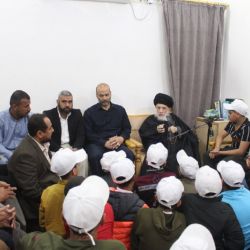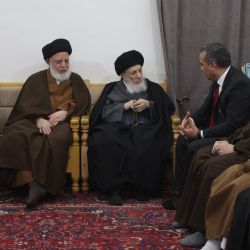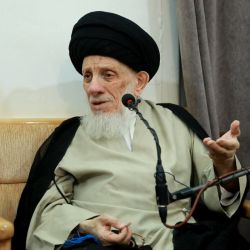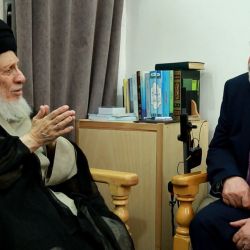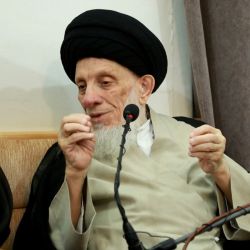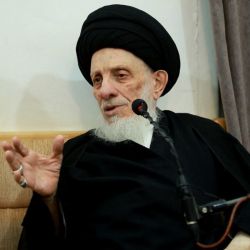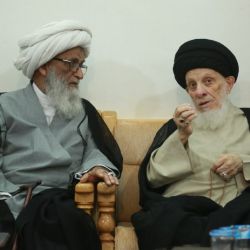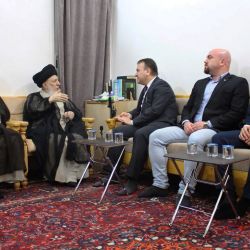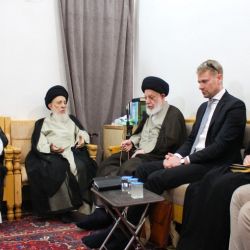
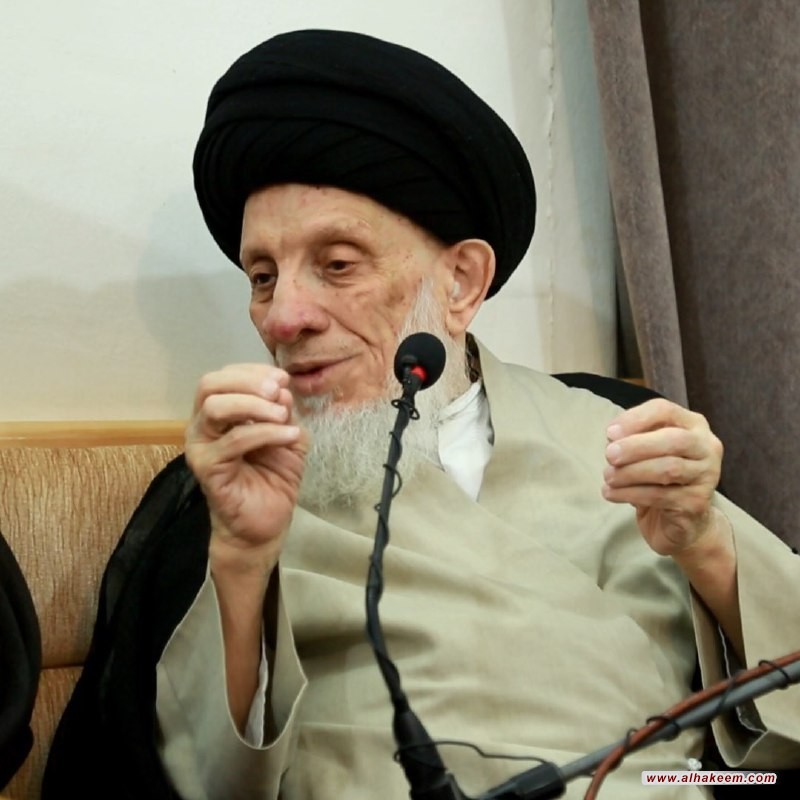
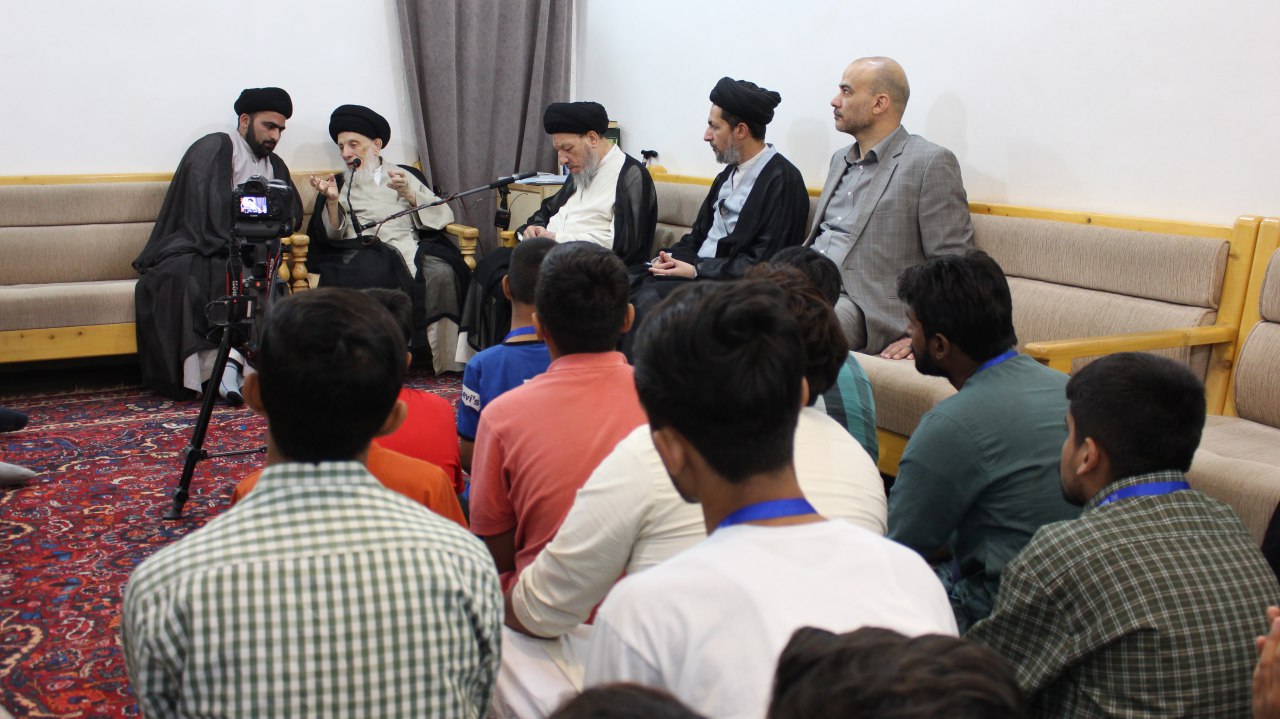
His Eminence Grand Ayatollah al-Hakeem advises the preachers from Pakistan to reach the remote areas to spread the message of Islam and the Ahlulbait

His Eminence Grand Ayatollah al-Hakeem advises the preachers from Pakistan to reach the remote areas to spread the message of Islam and the Ahlulbait
2019/06/11

His Eminence Grand Ayatollah Sayyid Muhammad Saeed al-Hakeem spoke to male and female preachers from Pakistan of the necessity of reaching the remote areas of Pakistan in order to teach the people there the Islamic laws, and to invite them to the True Path, and to propagate to them the message of the Ahlulbait (peace be upon them).

This advice was also directed especially towards the female preachers. After exerting their efforts in learning and studying, they must undertake their duties as preachers, by explaining the Islamic laws pertaining to women, so that the women can benefit from them in those areas. His Eminence continued to advise preachers towards having good behavior and etiquettes, humility, and keeping close to other believers, so that every one of them can fulfil their duties towards God in a manner that pleases Him, the Prophet and the Infallibles (peace be upon them all).

At the end, His Eminence supplicated to God that He accept the guests’ ziyarah and good deeds, and He answers their calls, and He supports them in their endeavors and duties, while interacting with others with love, compassion, honesty and humility. He prayed that He gives them the fruit of their good acts in this life and in the Hereafter. He is, indeed, All-Hearing, All-Knowing.

Day Questions

Does masturbation during the month of Ramadan void the fast, if it does not end with ejaculation?

If he intended to break the fast by such an act, his fasting is invalidated, whether or not ejaculation took place. He would then have to make it up later as qadha as well as pay the kaffarah. If he did not intend to break the fast, his fasting is not void. In any case, it is prohibited for the individual to masturbate even if it does not end with ejaculation. If one does so, he is required to seek the forgiveness from Allah Almighty and repent to Him.

Does the ability of the person contemplating sin to actually carry out his thoughts have any bearing on the punishment? If, for example, I want to commit adultery, but I do not know how to approach a woman. Another person may be able to do so, yet refrains from doing it. Is that person’s sin and mine of the same severity?

The individual does not deserve to be punished for a sin just because he wants to commit it. If he is able to commit the sin but refuses to do so because he fears or respects God, Almighty Allah will reward him for passing such a test correctly.

Seeing that the significance behind the iddah period is so that the father can be identified adequately if the woman becomes pregnant, and contraception almost eliminates the chances of pregnancy, is there any need of the iddah period when using contraception?

The reason behind the waiting period is not necessarily identifying the father if the woman is pregnant. If this was the reason, then it would have been sufficient for Almighty Allah the Divine Legislator to consider one menstrual cycle as a waiting period and not any longer duration. Almighty Allah knows the actual reason behind such legislation. Therefore, the iddah must be observed even if contraception was used.