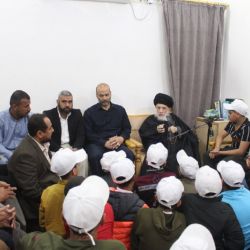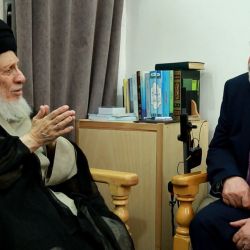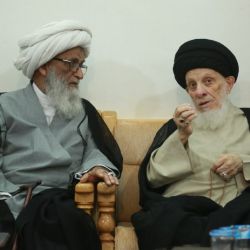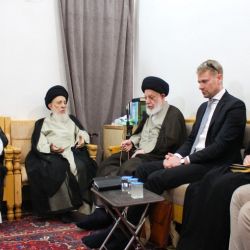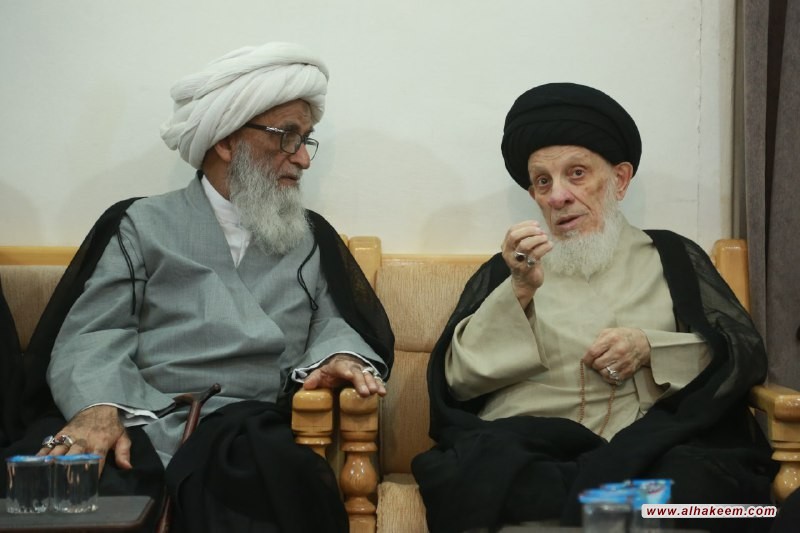
His Eminence, Grand Ayatollah al-Hakeem, receives His Eminence, Grand Ayatollah Shaikh Basheer al-Najafi

His Eminence, Grand Ayatollah al-Hakeem, receives His Eminence, Grand Ayatollah Shaikh Basheer al-Najafi
2019/05/10

During the Holy month of Ramadhan and its spiritual atmosphere, His Eminence, Grand Ayatollah al-Hakeem, receives His Eminence, Grand Ayatollah Shaikh Basheer al-Najafi, on Thursday night the 4th of the holy month.
Day Questions

My question is regarding the status of Ayesha bint Abi Bakr. I recently had a heated argument whereby this person who is also a Shia claimed that Shias must address Ayesha bint Abi Bakr as Umm Al Mumineen as it was addressed by Allah in the Quran. Should Shias call her Umm Al Mumineen?

Holy Quran called the wives of the Prophet (peace be upon him and holy progeny) as the mothers of believers. There is no doubt that this name applies to them, but there is no obligation to mention it every time the name of a wife is mentioned and this does not mean that they are excluded from committing sins. Everyone Allah Almighty creates is subject to the general divine rule that everyone bears the responsibilities of their actions, as Almighty Allah said: "And whoso doeth good an atoms weight will see it then, And whoso doeth ill an atoms weight will see it then." (99:7-8).

Can you give me examples of ways to return to the marriage ties after divorce has taken place and during the waiting period?

This can be done by any expressions by which this is intended, such as saying: “You are my wife” or similar wordings. It can also be done by any action by which the man expresses his intent to return the marriage ties, like kissing her or placing his hand on her body or further acts of lust.

Do we have to pay khums on any savings, even if I have a debt which I am paying in weekly or monthly instalments from my savings?

If one took a loan for the purposes of spending it for the current year’s expenses, the outstanding balance of the loan at the end of the khums year can be deducted from the total savings. If the debt is greater than all the savings from that year, then there is no khums to pay. If not, the difference is subject to khums.

Is it disliked to sleep between Fajr and Sunrise?

Yes, it is disliked to do so; it is recommended to spend the time between dawn and sunrise with post-prayer acts and thikr.